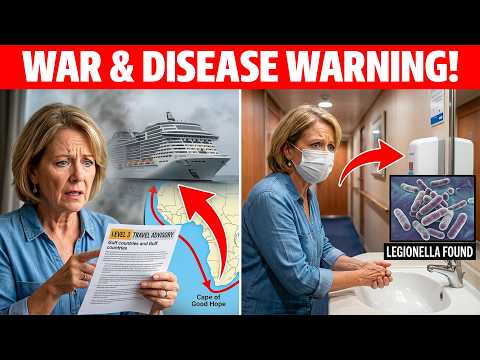
2026 Shut Down Cruise: Why Thousands are Canceling???
March 6, 2026
706 views
2026 Shut Down Cruise: Why Thousands are Canceling???
==
#cruiseship #cruise #cruisenews
===
2026 Shut Down Cruise: Why Thousands are Canceling???
You might think conflicts in the Middle East wouldn’t affect your cruise vacation. But in reality, they already are.
As tensions rise around the Persian Gulf and the strategic shipping route of the Strait of Hormuz, several cruise lines are being forced to reconsider or adjust their itineraries in the region.
In this video, we’ll take a closer look at how regional conflicts are beginning to impact cruise routes and the wider cruise industry. And even cruises far from conflict zones may still face another serious risk—one that can disrupt a voyage almost instantly. So what is it? Let’s find out.
2026 Shut Down Cruise: Why Thousands are Canceling???
The maritime world is currently witnessing a staggering retreat as the geopolitical temperature in the Middle East reaches a boiling point. For American travelers and cruise enthusiasts watching from across the Atlantic, the news that MSC Cruises and Celestyal Cruises have abruptly terminated their winter seasons in the Persian Gulf serves as a somber reminder of how fragile our global playgrounds truly are. While the headlines often focus on oil prices and military maneuvers, the reality for the travel industry is one of immediate and jarring disruption. The U.S. State Department’s decision to elevate travel advisories to “Level 3: Reconsider Travel” for the UAE, Bahrain, and Qatar was the final domino to fall, signaling that the risk of being caught in the crossfire—whether kinetic or logistical—has become too great to ignore. This isn’t just a minor itinerary change; it is a full-scale evacuation of a region that was, until recently, touted as the next great frontier for luxury cruising.
2026 Shut Down Cruise: Why Thousands are Canceling???
You might wonder why this matters so much to the American audience, given that the Persian Gulf is often seen as the playground of European lines like MSC. However, the connection is deeper than it appears. While brands like MSC and Celestyal dominate the local seasonal market, the parent corporations and the global supply chains are inextricably linked to U.S. interests. Royal Caribbean Group and Carnival Corporation, both headquartered in Florida, operate a massive web of subsidiaries that frequently move ships through these waters. Even if a ship isn't flying the Stars and Stripes, the passengers often are. Thousands of Americans fly into Dubai and Doha every winter to board these vessels, drawn by the allure of the "Grand Voyage." When a ship like the MSC Euribia is forced to become a "floating hotel" in Dubai because it can no longer safely navigate the Strait of Hormuz, it leaves American families stranded and travel insurance providers scrambling. The Strait of Hormuz is a narrow chokepoint through which nearly a third of the world's liquefied natural gas and a fifth of its oil passes; for a cruise ship, it is a narrow corridor of vulnerability where a single miscalculation by regional actors could lead to a catastrophic international incident.