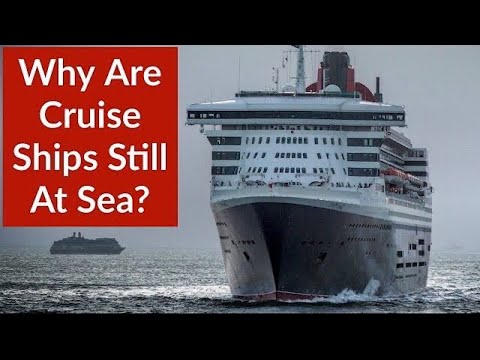
Why didn’t they put the cruise ships in cold layup during the pandemic?
March 12, 2021
7.9K views
Wondering why the cruise ships are all still at sea? Or in other words - why weren’t empty cruise ships brought back home?
The answer might not be what you think! Find out why the Cruise Ship's aren’t docked and deactivated, but rather kept active at sea!
--
▶ SUBSCRIBE for regular cruise ship updates & maritime history: https://bit.ly/38BR2DK
▶ READ: My QM2 History books: https://bit.ly/3nISs3w
▶ COLOUR IN: Cunard Colouring Book: https://bit.ly/2O2L9r9
▶ FOLLOW ME on Instagram: https://bit.ly/3qg1AOR
▶ CONNECT WITH ME on Facebook: https://bit.ly/39sBKQP
▶ CHECK OUT my Cunard history website: https://www.chriscunard.com/
▶ LEARN MORE about me: https://www.chrisframe.com.au/
▶ Image support thanks to Andrew Sassoli-Walker https://www.solentphotographer.com/ and Vicki Cross (lime photo).
--
One key reason some cruise ships are at sea:
Cruise Ships are Operational and Cruising Right Now!
Italy was among the first to allow limited cruising in their waters with MSC’s Grandiosa and Seashore sailing local cruise voyages for Italian guests during both 2020 and 2021, while Costa undertook some limited cruising last year.
Dream Cruises has been successfully sailing in both Taiwan and Singapore offering local voyages aboard World Dream and Explorer Dream. Royal Caribbean is also offering cruises from Singapore with the Quantum of the Seas, and are sending the new Odyssey of the Seas to cruise from Israel.
An array of river cruising companies have resumed sailings - particularly across Europe – while even in relatively strict Australian waters, Aussie flagged ships from Coral Expeditions have resumed sailings to the Kimberley and Coral Coast.
--
But the main reason:
The majority of the world’s cruise ships are still laid up... And there are two distinct forms of layup – hot layup and cold layup.
Let's start with cold layup. A cruise ship in cold layup is deactivated, meaning its on-board machinery and mechanics are shut down. This is done for long-term storage of a ship where the cost of running the vessel is higher than the cost of shutting it down.
For cold layup, vital equipment is mothballed to preserve it. As such, ships in cold layup rely on external power for basic services.
Key components such as emergency lighting and fire sprinklers can be kept powered up via a shore side power source.
But the process of shutting the ship down is costly, and reactivating the ship is equally so – as well as being time consuming.
It is for that reason that the cruise ships are nearly all in another form of layup – warm layup; which is also called hot layup.
Cruise ships in warm layup remain operational. They run on their own engines, thanks to an on board team of engineers who maintain all the systems and services… it’s actually quite complex to run a laid up ship, and I made a separate video about how this takes place which you can check out after you’ve watched this video ☺
(https://www.youtube.com/watch?v=QwEN3MSlZ5o)
So most of the cruise ships are in warm layup, meaning they are still operational. It is for this reason that you see so many cruise ships sailing around, even though there’s very limited cruising currently taking place.
Cruise ships in warm layup have a small live in crew aboard – so they require food, medical supplies and crew changes.
This is facilitated by visits to ports such as Southampton, Genoa, Civitavecchia or Manila, while in the Caribbean, many US based cruise ships are getting their supplies from cruise line’s private islands via tender boats.
Many of the cruise ships have spent much of the past year at anchor not far off the coast, offering amazing sights for shore side spectators of large clusters of ships all together. But you’d notice that they don’t just stay put.
They regularly set sail, going out for a short cruise to nowhere before returning to anchor for a few more days. This is done to ensure all the laid up cruise ships can share the limited anchorages around the world.
--
Music: Youtube Audio
Thumbnail Photo: Alison Morton
—
#cruisenews #cruiseship #cruiseline