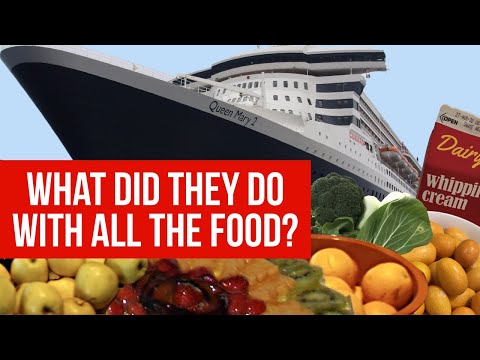
What did they do with all the Food during the Global Cruise Shutdown?
August 28, 2020
84K views
Talk to anyone who has been on a cruise ship, and chances are they’ll mention the food. With food, in most cases, available around the clock aboard a cruise ship, and multiple options of where to eat and what to eat, cruise ships usually have A LOT of food on board.
So, with the ongoing cruise pause cancelling thousands of cruise holidays in 2020 – what has happened to all that food?
When cruise lines order food, they order big! For example a ship the size of Queen Mary 2 will serve up enough tea in a normal year to fill an Olympic sized swimming pool, use over 1.5 million eggs, 8,000 bags of flour and almost 372,000 packets of cereal!
To manage the storage of food cruise ships generally have multiple food storage areas. These areas take up huge spaces within the ship – often below the waterline and away from the eyes of passengers, the stores consist of huge walk-in refrigerators & freezers as well as dry store rooms.
These stores remain well stocked and organised at all times, thanks to a dedicated team and specialised computer systems that are responsible for ordering supplies.
But as we all know, this year hasn’t been a good example of what is ‘normal’ as in March 2020 the cruise industry entered into a voluntary cruise pause in response to the Coronavirus outbreak.
300 cruise ships around the world being laid up could have led to huge food waste, so an alternative use needed to be found.
Dealing with such large quantities of food requires a supply chain and forward planning to ensure the right goods and quantities are available and delivered to the cruise ship on time.
When the cruise pause came into effect, not only was there food aboard the ships, but plenty of stock also waiting to be loaded aboard. Furthermore, orders for subsequent voyages had already been processed and in many cases was en-route to cruise ports around the world.
There was far too much left on board the cruise ships to be eaten by the officers and crew who remain on board, so cruise lines looked to shore side charities who were happy to take on tons of produce to help feed people in need.
Donating to charities isn’t new to cruise lines, with many lines pledging money to the Australian Bushfire relief, as well as offering financial and logistical support to hurricane devastated regions – such as the Bahamas in the wake of hurricane Dorian.
And while donating produce isn’t entirely new to some cruise lines, the scope of the donations following the cruise pause certainly is.
When ships are sailing on longer duration voyages (such as world cruises) or when they are based somewhere other than their homeport, produce is taken aboard at various international ports.
If you’ve been on-board a ship that does longer duration voyages, you may have noticed that things that are served in their original packaging such as cereal boxes and canned soft drink or soda are often from unexpected places.
It’s possible for a group of friends to all order a can of soda, and each person will get a can that originates from a different country.
As the cruise pause happened at the tail end of the northern winter season – there were a high number of ships undertaking itineraries away from their usual base of operations. This meant that there were also a number of food orders that were no longer needed – in places other than the usual homeports of these ships.
The immediate and knock on effects of Covid have negatively impacted many people around the world, including those working in or with the travel industry. Even though donating the excess food doesn’t fix those problems – it is nice to know that not all of the food that was originally destined for cruise passengers was wasted.
--
Fact Ref [1]: QM2: A Photographic Journey (Book) / The History Press & Cunard Line QM2 Information Sheet.
Fact Ref [2]: Available from multiple sources quoting the UN - for more info visit https://www.saveonethird.org/
--
Audio and Sound FX: YouTube Audio Library
All images and video footage in this video are Chris Frame & Rachelle Cross.
--
#cruisenews #cruisepause #cruiseship #cruiseshipnews