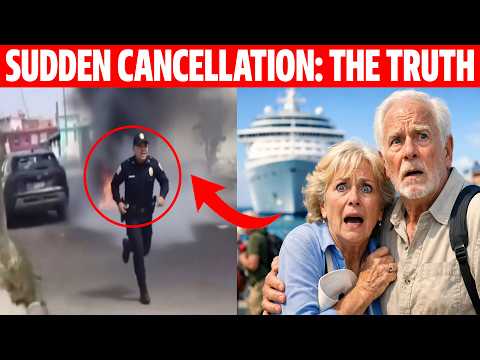
STOP CRUISING MEXICO! The Shocking Truth Behind the Mass Cruise Ship Exodus
February 27, 2026
537 views
STOP CRUISING MEXICO! The Shocking Truth Behind the Mass Cruise Ship Exodus
===
#cruise #cruisenow #cruiseship
===
STOP CRUISING MEXICO! The Shocking Truth Behind the Mass Cruise Ship Exodus
For years, the Mexican Riviera has been one of the most tempting cruise destinations, promising sunshine, beaches, and a break from everyday life. But recent unrest across parts of Mexico has reminded travelers that even popular ports can change quickly. For cruise lines and passengers alike, it raises an important question: how safe is cruising when conditions shift unexpectedly?
Let's find out on today's episode of Cruise Now:
When we think of a cruise, we often envision a self-contained ecosystem of luxury, a "bubble" that drifts effortlessly from one exotic locale to the next. Yet, the moment the gangway is lowered at a port like Puerto Vallarta or Mazatlán, that bubble interfaces with the complex, often gritty reality of local governance and internal strife. The current crisis in Mexico—marked by roadblocks, vehicle arsons, and the chilling presence of paramilitary-style incursions—highlights the terrifying speed at which a destination’s "vibe" can shift from welcoming to hostile. For the cruisers currently navigating these waters, the psychological toll is significant; there is a unique kind of whiplash that comes from waking up to a gourmet breakfast only to be greeted by a captain’s announcement that the day’s much-anticipated excursion has been scrapped due to "civil unrest." It is here, in the tension between disappointment and safety, that the true value of the cruise industry’s invisible shield becomes apparent.
STOP CRUISING MEXICO! The Shocking Truth Behind the Mass Cruise Ship Exodus
Behind the polished brass and the midnight buffets, the major cruise lines—be they Royal Caribbean, Norwegian, or Carnival—operate with the precision of a military intelligence agency. While a passenger might see a canceled port as a bureaucratic annoyance, the decision is actually the culmination of a sophisticated risk-assessment matrix. These lines maintain 24-hour security operations centers that are tethered to global intelligence networks, local port authorities, and private security consultants. When the first reports of violence broke out in the Jalisco region this February, these centers were likely humming with activity long before the first passenger noticed a plume of smoke on the horizon. The industry’s primary product is not actually a vacation; it is the illusion of total safety within a managed environment. If that illusion is shattered by a single high-profile incident involving a tourist, the economic fallout for the brand is catastrophic. Therefore, the "over-cautious" approach that many travelers bemoan is, in fact, the very mechanism that allows the industry to exist in a world where stability is never guaranteed.
STOP CRUISING MEXICO! The Shocking Truth Behind the Mass Cruise Ship Exodus
The ripple effects of the Mexican unrest extend far beyond the immediate logistical nightmare of rerouting a 150,000-ton vessel. There is a legal and ethical labyrinth that both the cruise line and the passenger must navigate. Most travelers rarely read the "Contract of Carriage" when they click "accept" during the booking process, yet this document is the definitive blueprint for how these crises are handled. It grants the captain and the cruise line near-total immunity to alter, skip, or substitute ports of call for safety reasons. While this often leaves passengers feeling financially slighted when they are denied a refund for a missed destination, it is the legal cornerstone that allows a ship to pivot instantly when a city like Puerto Vallarta becomes a red zone. The frustration of a "sea day" replacing a "shore day" is a small price to pay for avoiding a situation where thousands of unarmed tourists are caught in the crossfire of a cartel power vacuum. The reality is that the ship is the only truly safe ground in such scenarios; it is a mobile sovereign territory that can literally sail away from trouble at twenty knots.